
Porcelain and sandstone are the two most popular choices for a new patio, and we lay plenty of both. They’re very different, so here’s our honest take to help you choose.
Porcelain
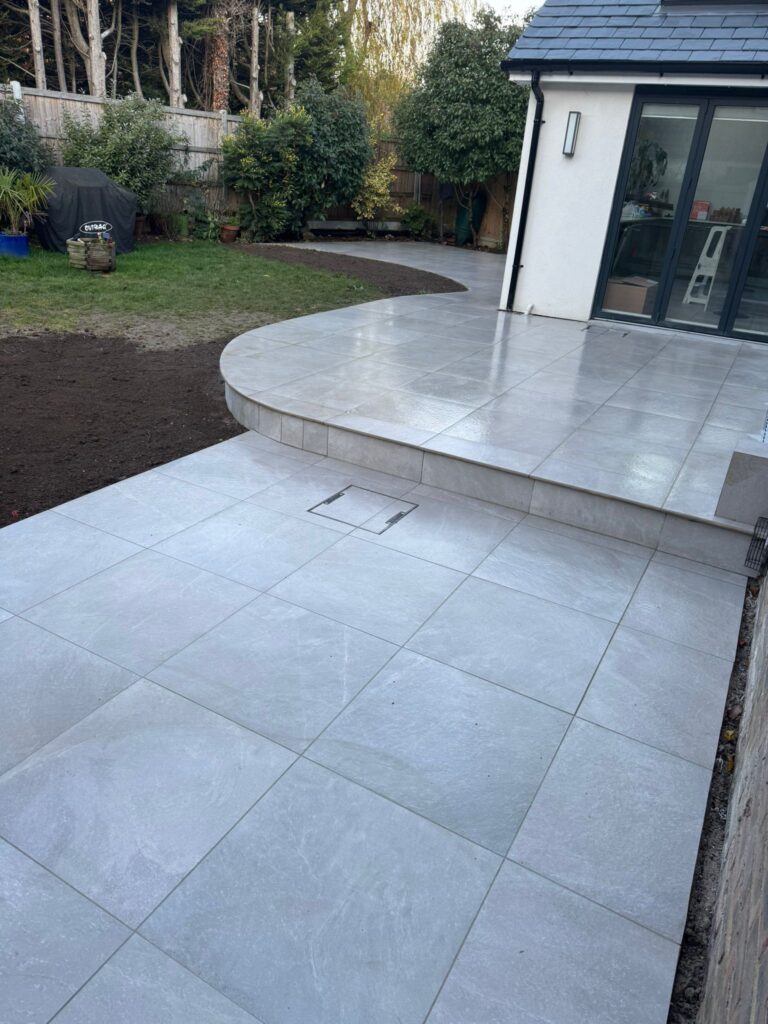
Porcelain gives a clean, modern finish and works really well with bi-fold doors and contemporary houses. It’s very hard-wearing and doesn’t soak up water like natural stone, so it’s much less likely to stain or go green.
- Low maintenance, usually just a brush and a wash
- Consistent colour and size, so it looks neat and sharp
- Very hard-wearing
The catch is that porcelain is harder to lay well. It’s tough to cut, and because it doesn’t absorb water, it needs a bonding primer on the back of every slab so it sticks to the mortar bed. Skip that and slabs can work loose. It’s a job for someone who knows what they’re doing.
Sandstone
Sandstone is a natural stone, so every slab is slightly different. It has a warm, traditional look that suits older houses and cottage gardens, and it’s often a bit cheaper than porcelain.
- Natural look that softens over time
- Easier to cut and shape on site
- Often a bit cheaper than porcelain
Because it’s natural stone it will absorb some water, so it can pick up stains and algae. A good clean now and again, and sealing if you want, keeps it looking its best.
What matters most: the base
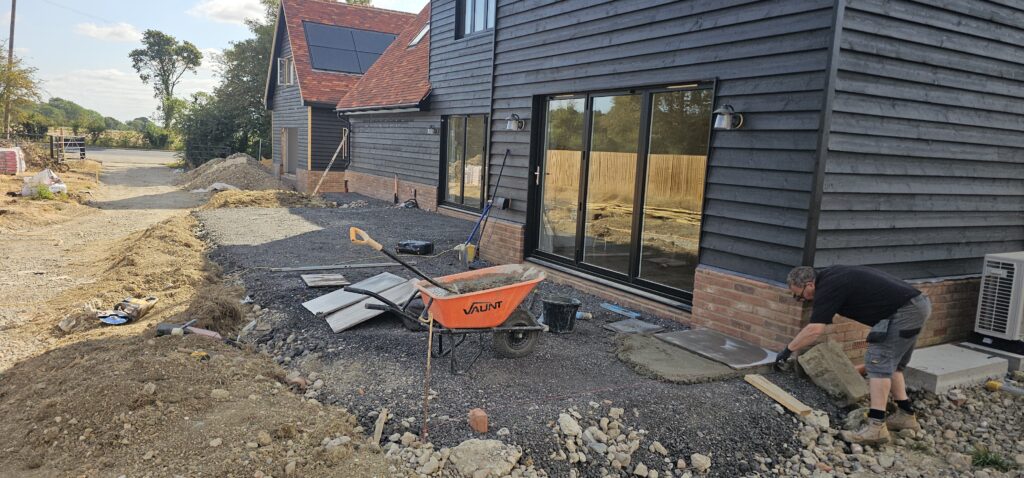
Whichever you choose, a patio is only as good as what’s underneath. We always dig out properly, lay and compact a sub-base, lay the slabs on a full bed of mortar and set the right fall so rainwater runs away from the house.
Still not sure?
We’ll bring samples, look at your house and garden and give you an honest recommendation. Have a look at our driveways and patios page and our recent projects, including a porcelain patio with a curved step and a sandstone patio we laid in a day.
If you’re planning a project in Chelmsford or anywhere in Essex, get in touch for a free site visit or call Mark on 07747 022565 or Garrat on 07783 549849.